In May 22, 2025, Russian news outlets reported more than 480 Ukrainian drones striking strategic targets deep within Moscow. The weapons of choice were modified Aeroprakt A-22 aircraft—small, Cessna-like, fixed-wing planes capable of carrying bombs or anti-personnel ordnance. The A-22's slower speeds and ability to fly at lower altitudes allow it to slip right under Russian defenses with the ability to deliver payloads via remote control or through the use of U.S.-designed autonomous guidance systems.
Ukrainian President Volodymyr Zelenskyy said he ordered the large-scale assault in response to a bombardment of 140 Russian drones on Kyiv the previous week. Russia's primary weapon in that attack was the Shahed, an Iranian drone equipped with an autonomous precision guidance system reverse-engineered from a crashed and recovered Israeli Hermes 450 drone.
In an attempt to prevent further Russian drone incursions, Ukraine is in the process of building an eastward-facing drone wall of remote-controlled and autonomous airborne units to protect mobile ground forces. Ukrainian technicians heavily employ the autonomous, Turkish-made Bayraktar TB2 and China's self-guided DJI Mavic to equip that wall.
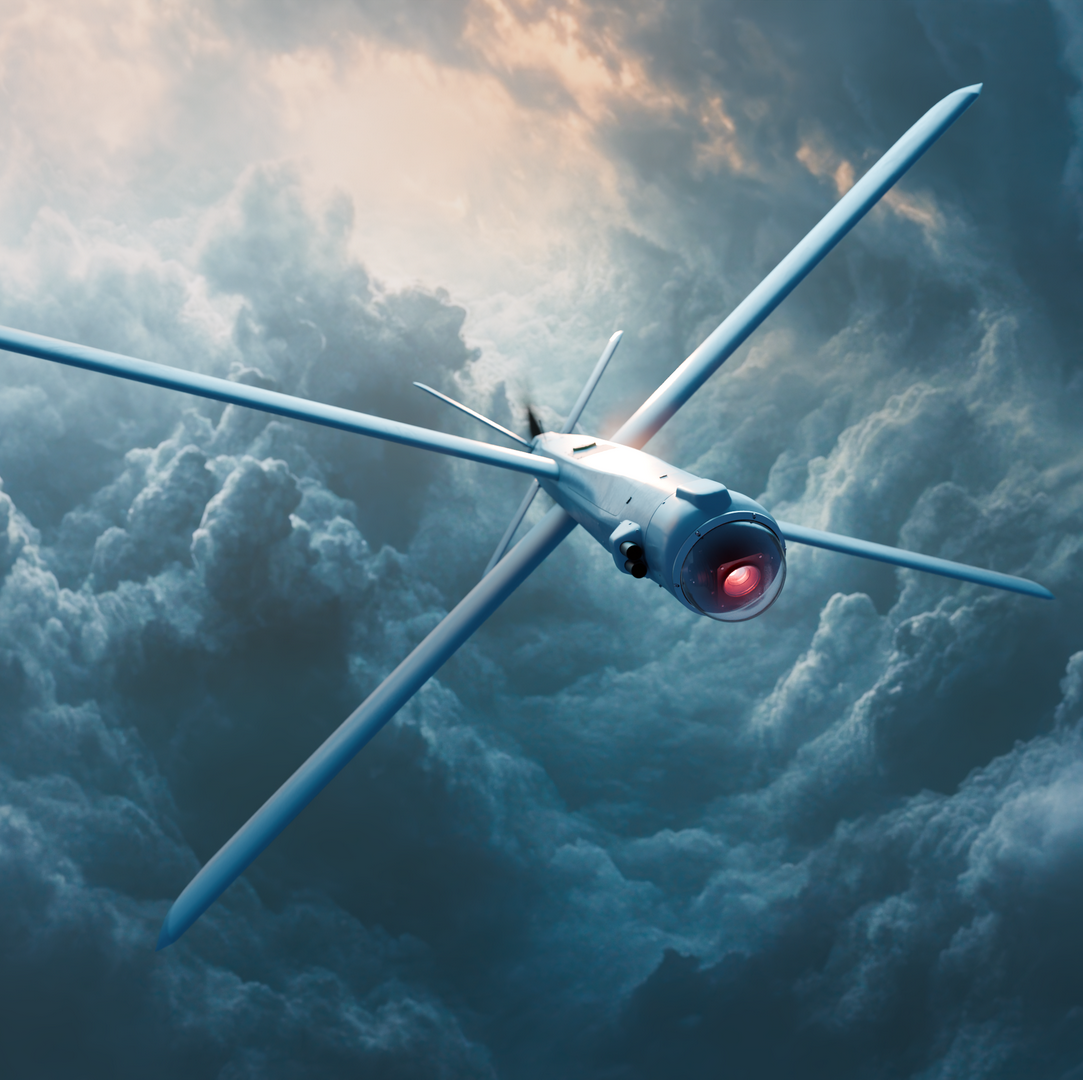
Since the early days of the conflict—which first broke out on February 24, 2022—Russia has been using devices like the Kalashnikov Kub-BLA, a high-precision loitering munition equipped with Chinese-built optics and guidance systems. Ukraine has responded with its U.S.-supplied Switchblade 300 and 600 "loitering missiles." These are AI-guided and piloted drones designed to stay airborne for hours longer than any human-piloted bomber, independently delivering their payloads on their targets. The Switchblade systems are based on the U.S. military's own Phoenix Ghost kamikaze drones. |
In May 22, 2025, Russian news outlets reported more than 480 Ukrainian drones striking strategic targets deep within Moscow. The weapons of choice were modified Aeroprakt A-22 aircraft—small, Cessna-like, fixed-wing planes capable of carrying bombs or anti-personnel ordnance. The A-22's slower speeds and ability to fly at lower altitudes allow it to slip right under Russian defenses with the ability to deliver payloads via remote control or through the use of U.S.-designed autonomous guidance systems.
Ukrainian President Volodymyr Zelenskyy said he ordered the large-scale assault in response to a bombardment of 140 Russian drones on Kyiv the previous week. Russia's primary weapon in that attack was the Shahed, an Iranian drone equipped with an autonomous precision guidance system reverse-engineered from a crashed and recovered Israeli Hermes 450 drone.
In an attempt to prevent further Russian drone incursions, Ukraine is in the process of building an eastward-facing drone wall of remote-controlled and autonomous airborne units to protect mobile ground forces. Ukrainian technicians heavily employ the autonomous, Turkish-made Bayraktar TB2 and China's self-guided DJI Mavic to equip that wall.
Since the early days of the conflict—which first broke out on February 24, 2022—Russia has been using devices like the Kalashnikov Kub-BLA, a high-precision loitering munition equipped with Chinese-built optics and guidance systems. Ukraine has responded with its U.S.-supplied Switchblade 300 and 600 "loitering missiles." These are AI-guided and piloted drones designed to stay airborne for hours longer than any human-piloted bomber, independently delivering their payloads on their targets. The Switchblade systems are based on the U.S. military's own Phoenix Ghost kamikaze drones. |














Tidak ada komentar:
Posting Komentar